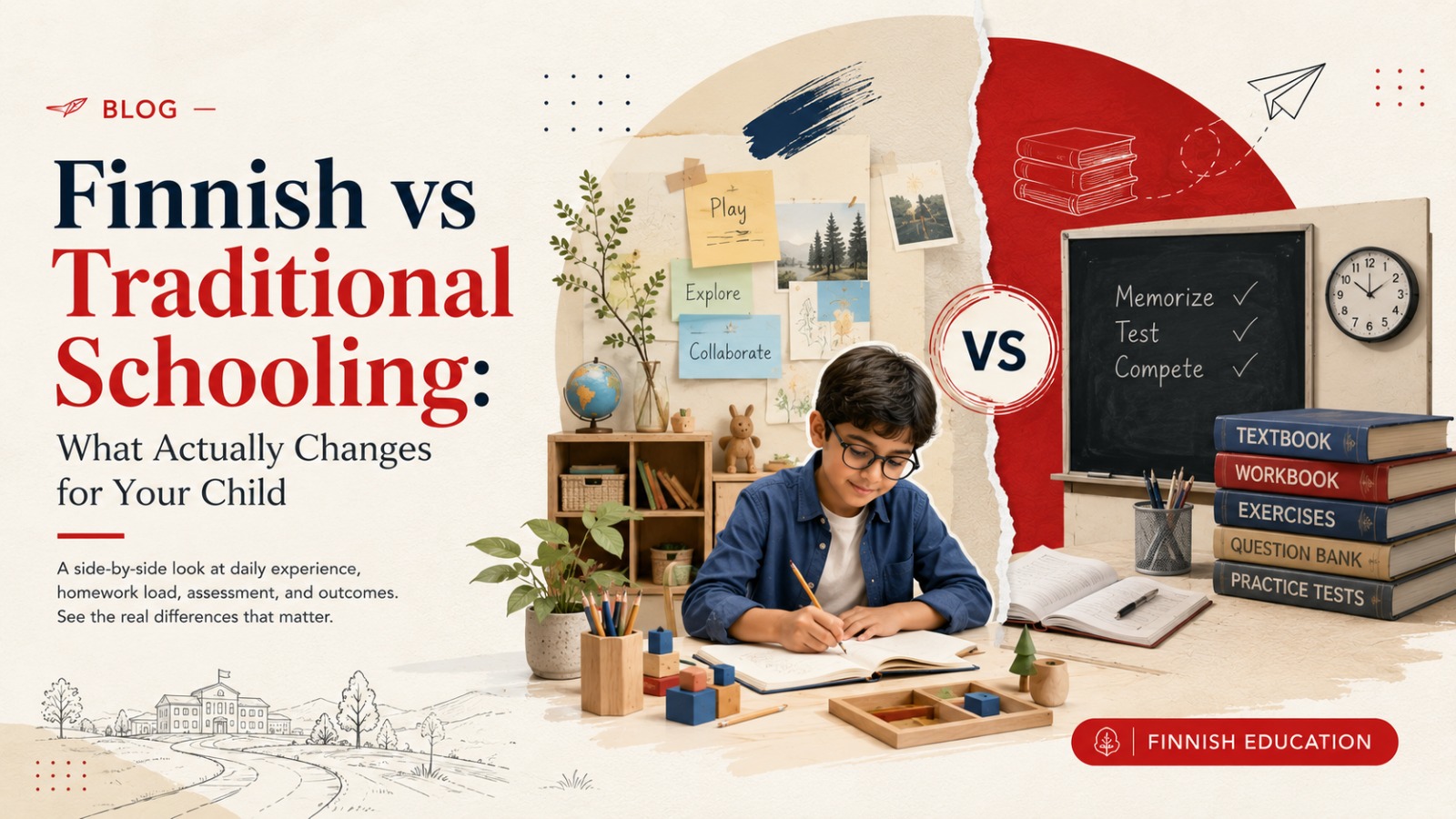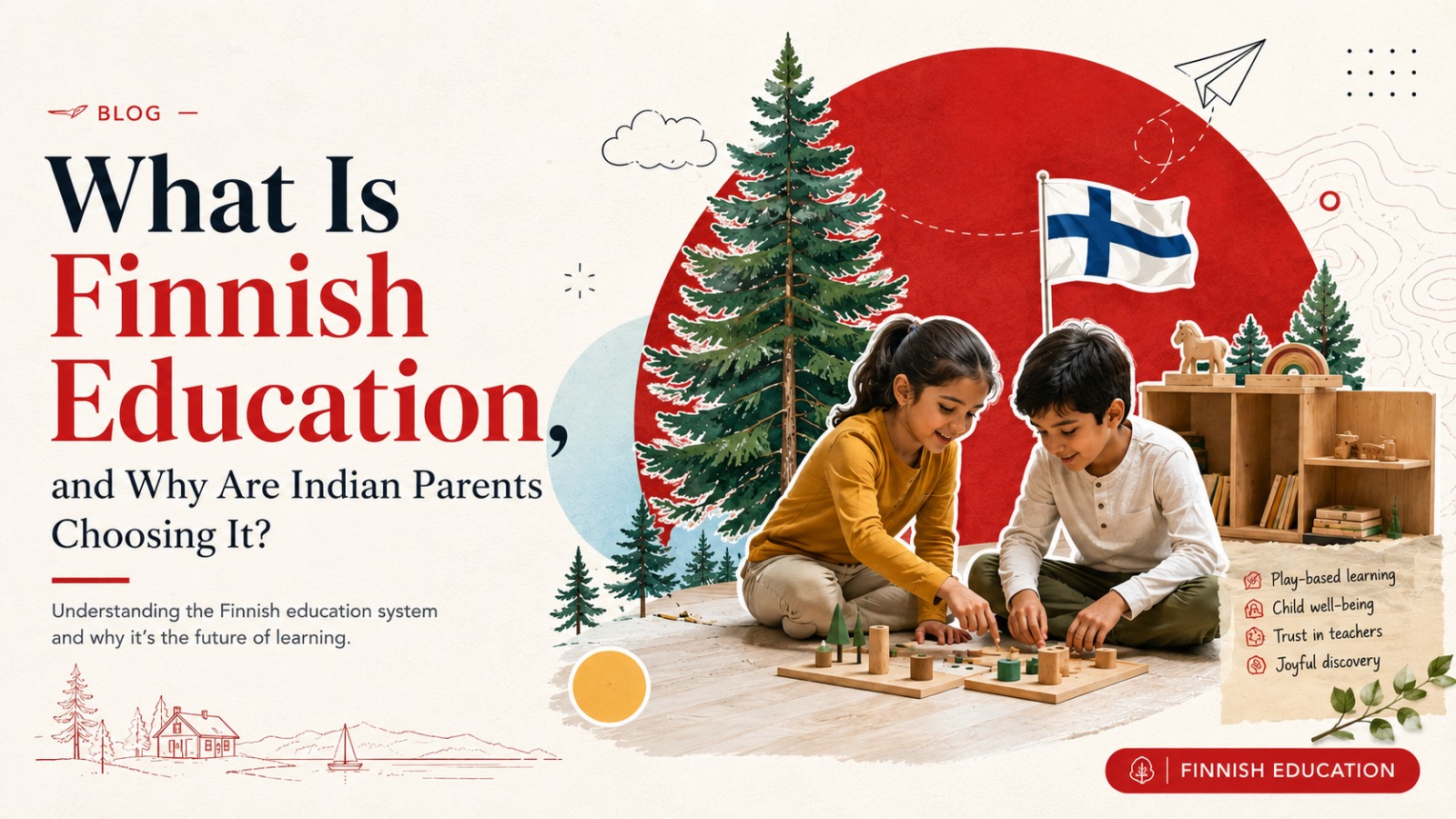
Finnish education is a school system built around play in the early years, highly trained and trusted teachers, and very little standardised testing. Children start formal academics later than in most Indian schools, learn through activity and enquiry rather than rote, and are assessed continuously by their teachers instead of through frequent high-pressure exams. The result is a model that consistently produces strong outcomes while keeping childhood stress low, which is exactly why a growing number of Indian parents are looking for it.
Later start, stronger foundations
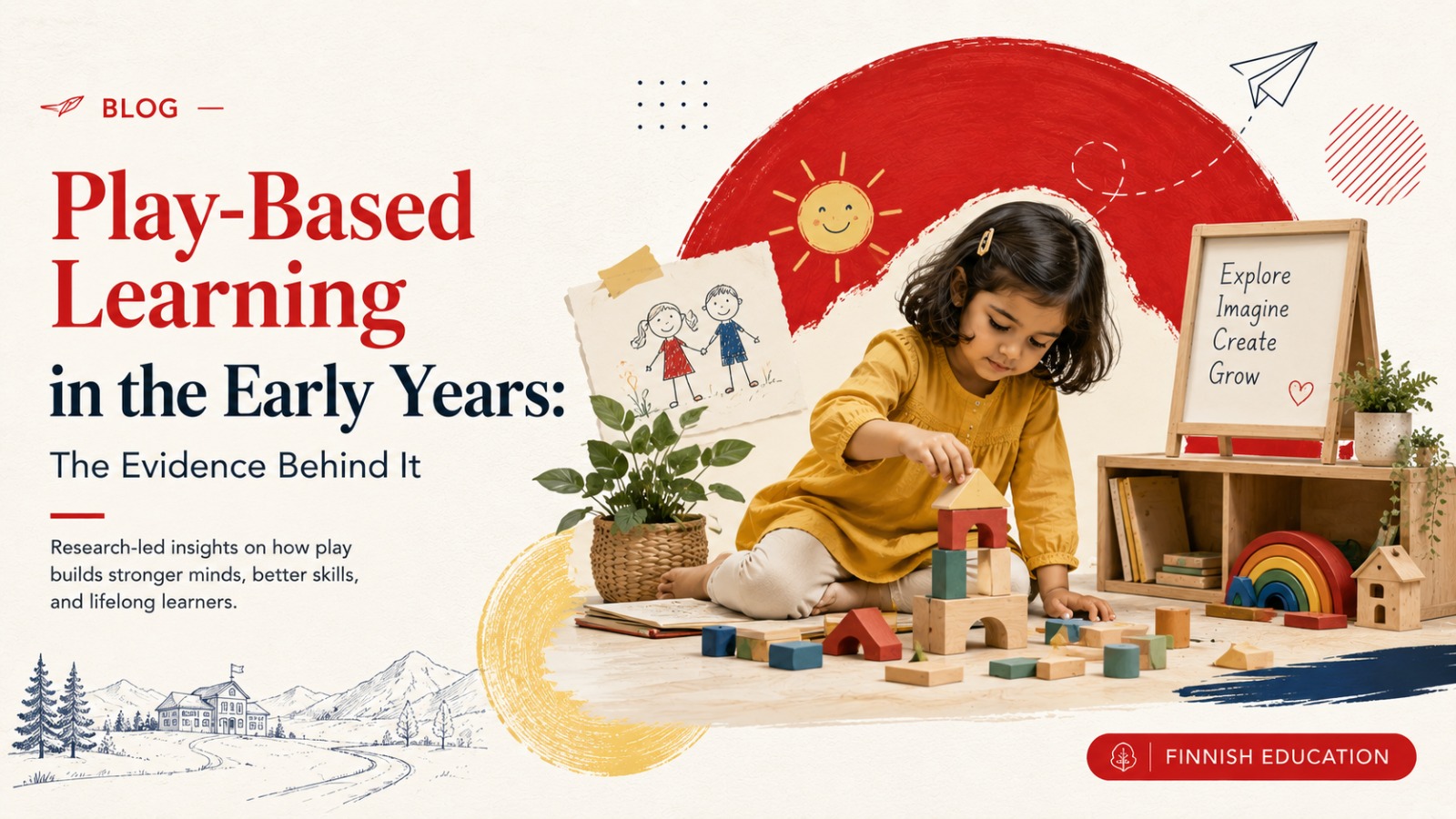
In Finland, children do not begin formal reading and number work at three or four. The early years focus on play, movement, language, and social skills, with structured academics introduced around age seven. This is not a delay for its own sake. Research on early childhood consistently shows that children who develop strong oral language, motor coordination, and self-regulation through play go on to read and calculate faster once formal instruction begins. The foundation is laid first, and the academics build on it.
Teachers who are trusted professionals
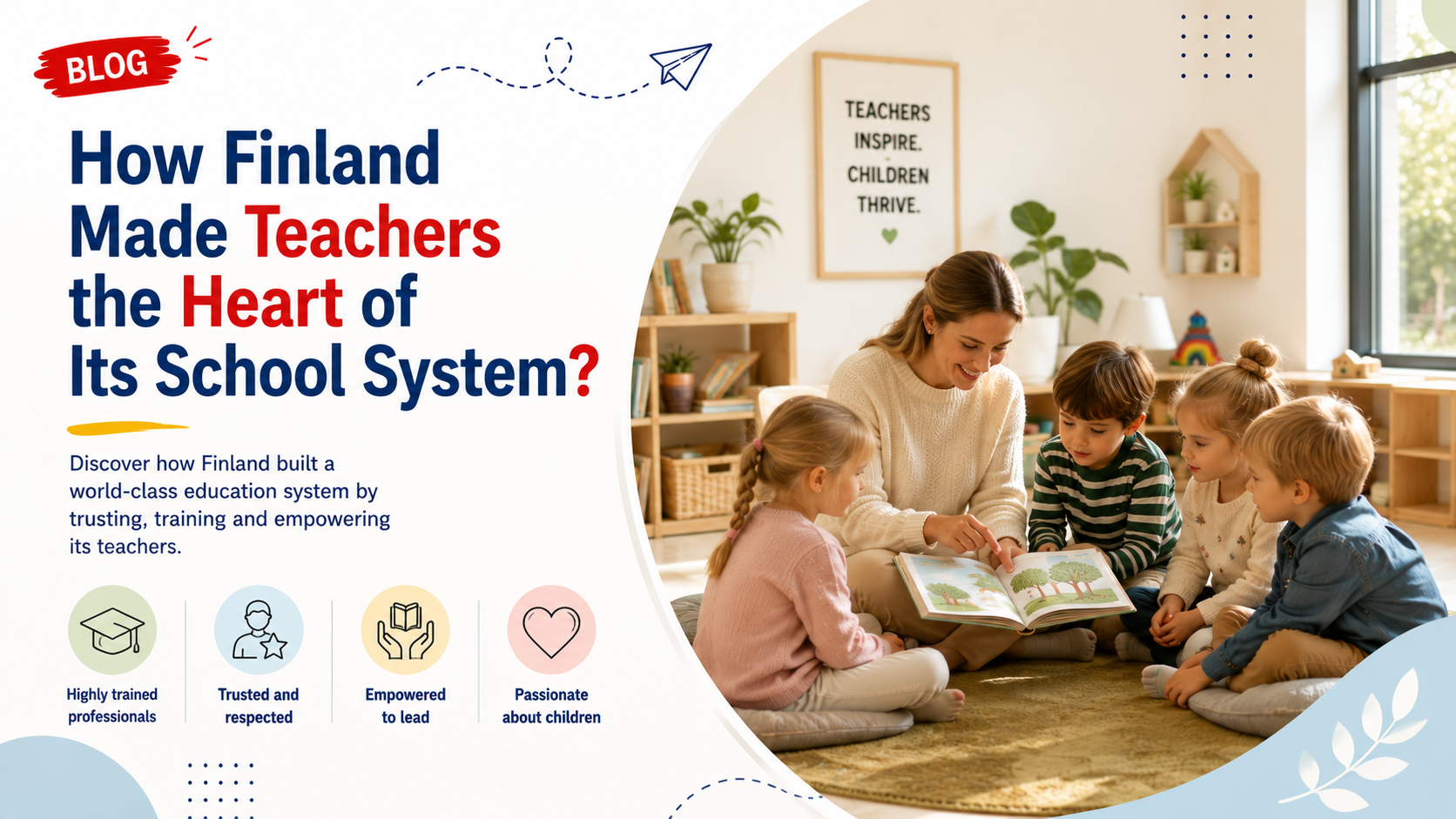
The Finnish system treats teaching as a high-status profession. Educators are given autonomy to plan lessons, choose methods, and respond to the children in front of them rather than following a rigid script or teaching to a test. For parents, this matters because it changes the classroom experience: a trusted teacher can slow down for a child who needs it, stretch one who is ready, and treat learning as something to be shaped rather than delivered.
Assessment without the fear
Perhaps the biggest difference Indian parents notice is the near absence of high-stakes testing in the early and middle years. Children are assessed, but through observation, projects, and continuous feedback rather than ranked examinations. The aim is to tell teachers and parents how a child is progressing, not to sort children against one another. For families worried about exam pressure starting far too young, this is a significant draw.
Equity as a design principle
Finnish schools are designed so that a child's outcome depends as little as possible on which classroom they land in. Support is built in early, before small gaps become large ones. While the Indian context is different, the underlying idea travels well: identify what a child needs quickly, and provide it before they fall behind rather than after.
Why it appeals to Indian families now
Indian parents are increasingly aware that a childhood spent almost entirely on exam preparation has costs, and that the skills employers and universities now value, such as communication, problem-solving, creativity, and resilience, are not the ones a purely rote system develops best. The Finnish model offers an alternative that does not sacrifice academic rigour but reaches it by a different route. It keeps children curious, confident, and healthy while still preparing them thoroughly.
Finnish learning in the Tricity
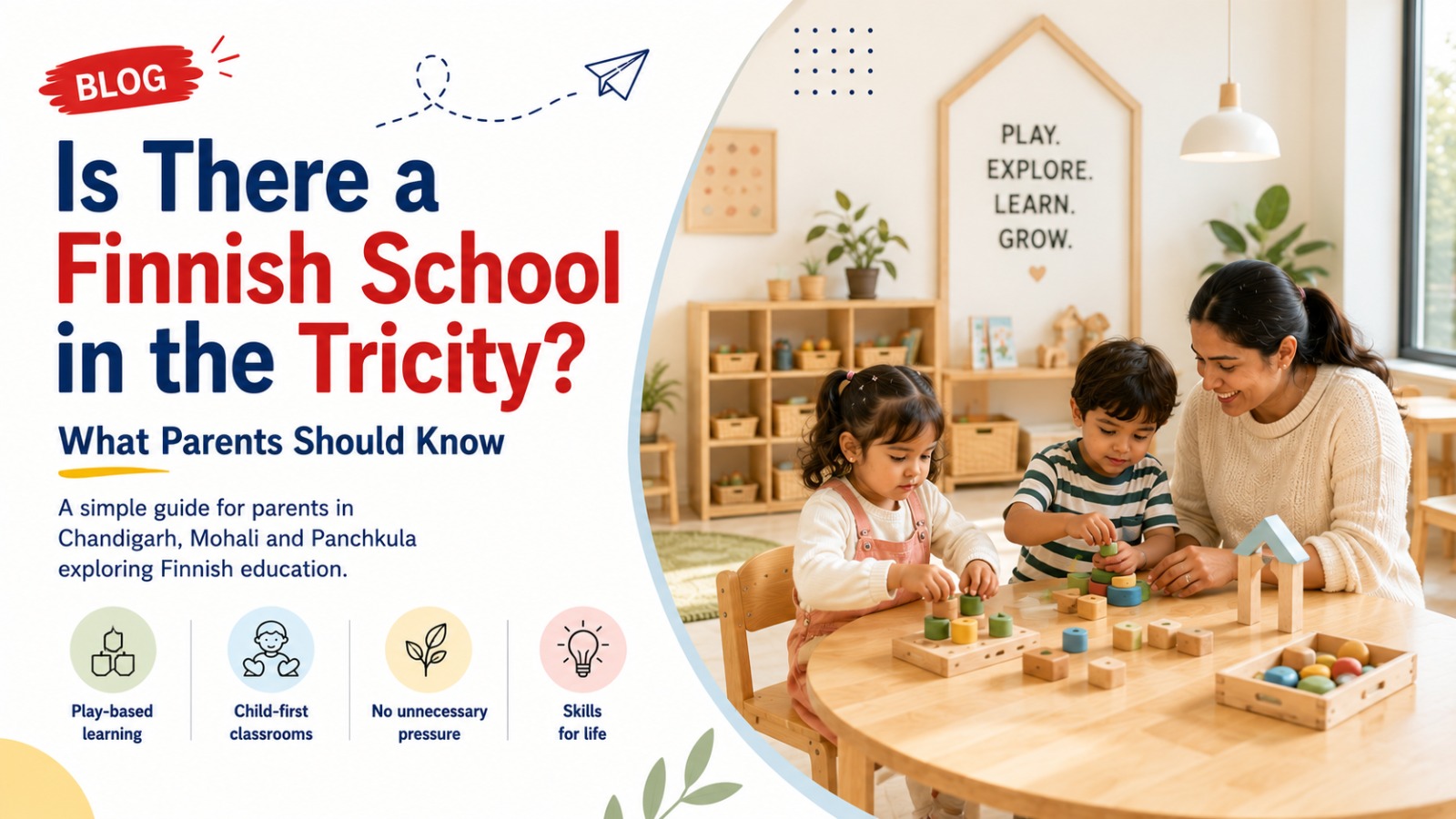
Dass and Brown Experiential Learning School (Dbels) brings this approach to families in Panchkula and the wider Tricity through its Finnish Elementary School, combining play-based early years with the structure Indian parents expect. For families who want their child to learn deeply without being overwhelmed, it is worth understanding how the Finnish model actually works before deciding what kind of school you want. If the ideas here resonate, the next step is to see them in practice.