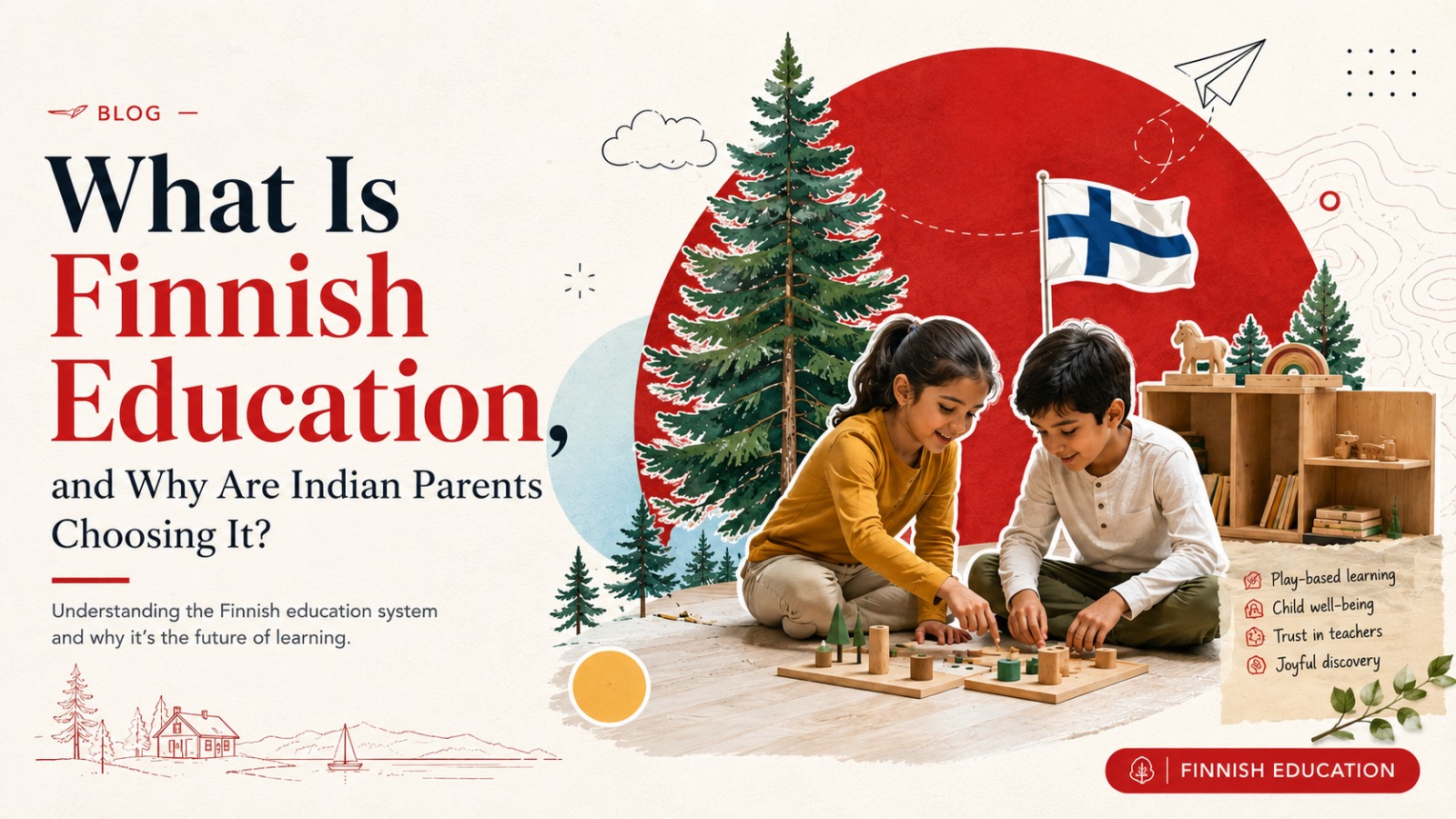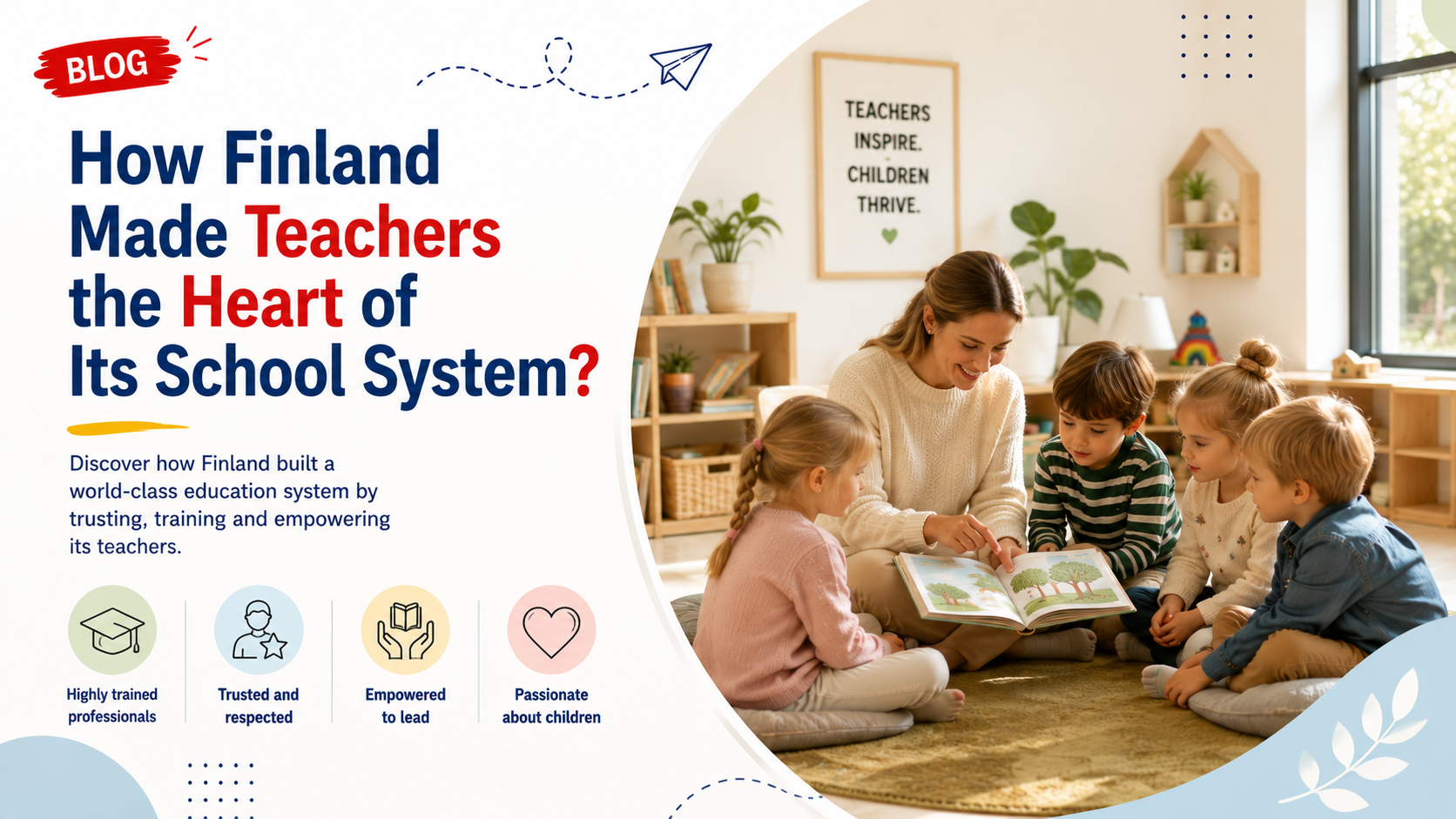
Finland's reputation for education rests on something less visible than facilities or technology: how it treats teachers. The system is built on the belief that a trusted, highly trained, autonomous teacher is the single most important factor in a child's learning. Understanding this helps parents see why the Finnish approach produces the results it does, and what to look for in any school that claims to follow it.
Teaching as a respected profession
In Finland, teaching is a sought-after profession, and educators are trusted to exercise professional judgement. They are not handed a rigid script to follow or required to teach narrowly towards a standardised test. This trust changes the classroom. A teacher with autonomy can adapt to the children in front of them, slow down where needed, and treat teaching as a craft rather than a delivery mechanism.
Why autonomy improves learning
When a teacher is free to respond to their actual class, learning becomes responsive. A concept that has not landed can be approached a second way. A child who is ready to go further can be stretched. A quiet struggle can be caught early. Rigid, test-driven systems make this hard, because the pace is set externally and the pressure to cover the syllabus overrides the need to actually teach it. Autonomy, paired with training, is what lets a teacher meet each child.
Continuous assessment, not constant testing
Because teachers are trusted to assess, Finnish classrooms rely on ongoing observation and feedback rather than a stream of ranked examinations. The teacher builds a real picture of each child over time and adjusts accordingly. For the child, this removes much of the fear that comes with constant testing. For the parent, it means feedback rooted in a teacher who genuinely knows their child.
What this means for parents
When you evaluate a school that claims a Finnish approach, look past the label to how teachers work. Are they given freedom to plan and adapt, or bound to a script? Are they supported with ongoing training? Do they assess through knowing their children, or only through tests? A school can buy Finnish-branded materials, but the method lives or dies on how it treats and trusts its teachers.
Bringing the method to India
Adapting this to the Indian context does not mean copying Finland exactly. It means hiring capable educators, training them well, and giving them the autonomy and support to teach responsively rather than mechanically. Where that happens, the benefits of the Finnish model follow, even in a very different setting.
The approach at Dbels
Dass and Brown Experiential Learning School (Dbels) builds its Finnish Elementary School around trained, supported educators, addressed as Educators within the school, who are given the room to teach responsively. For families in Panchkula and the Tricity, the quality of teaching is the thing to examine most closely on any school visit. Watch how a teacher works with the children, and you will learn more about a school than any facility tour can tell you.